Compass
Map how your business actually runs.
Most of how a business runs lives in people's heads rather than in any document. Map the work as it's actually done, then make your changes one at a time and check each one against what the map told you to expect.
The pieces Compass gives you.
Map your workflows and the people and systems they rely on
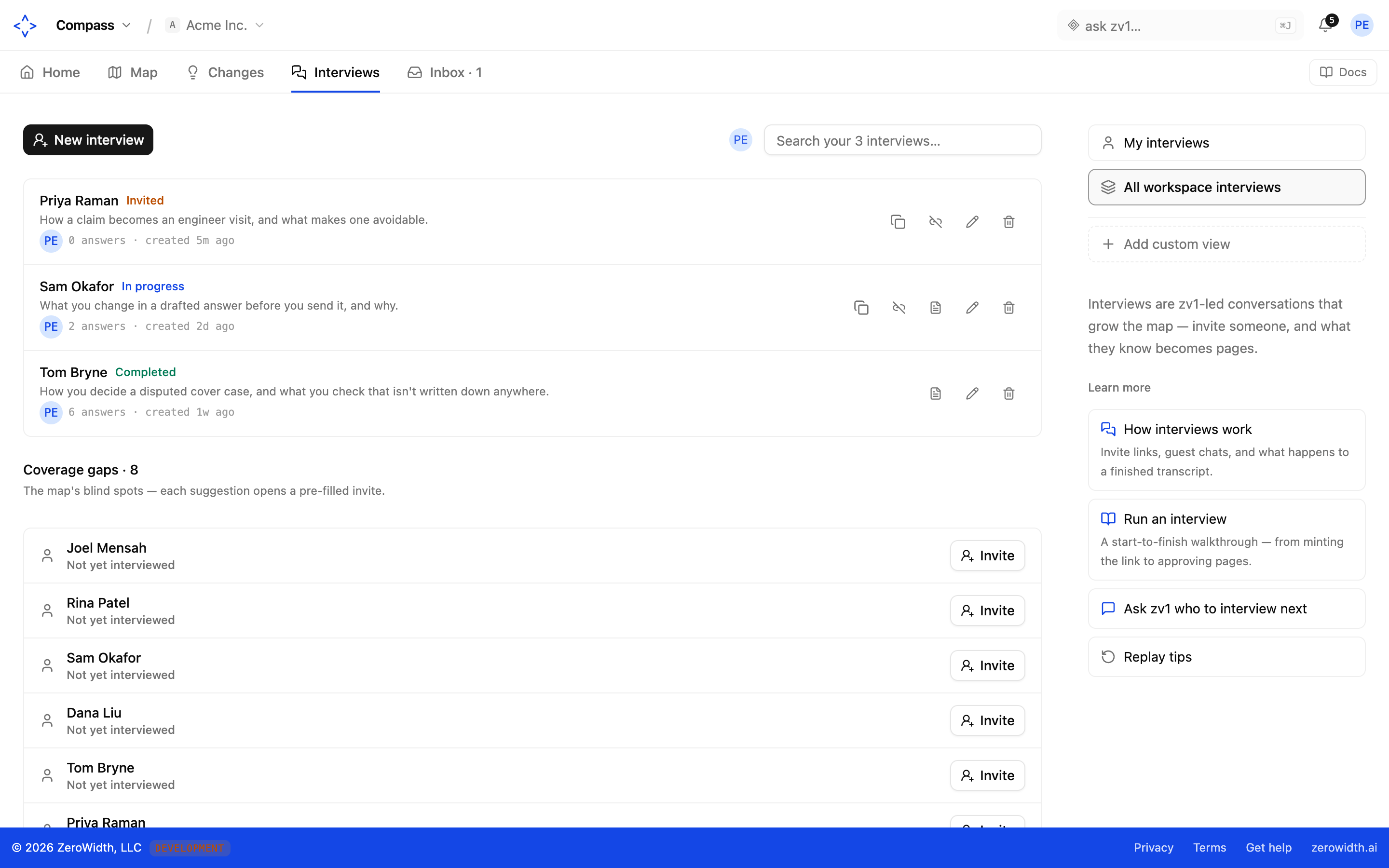
Interview your team by link and review what they said as draft pages
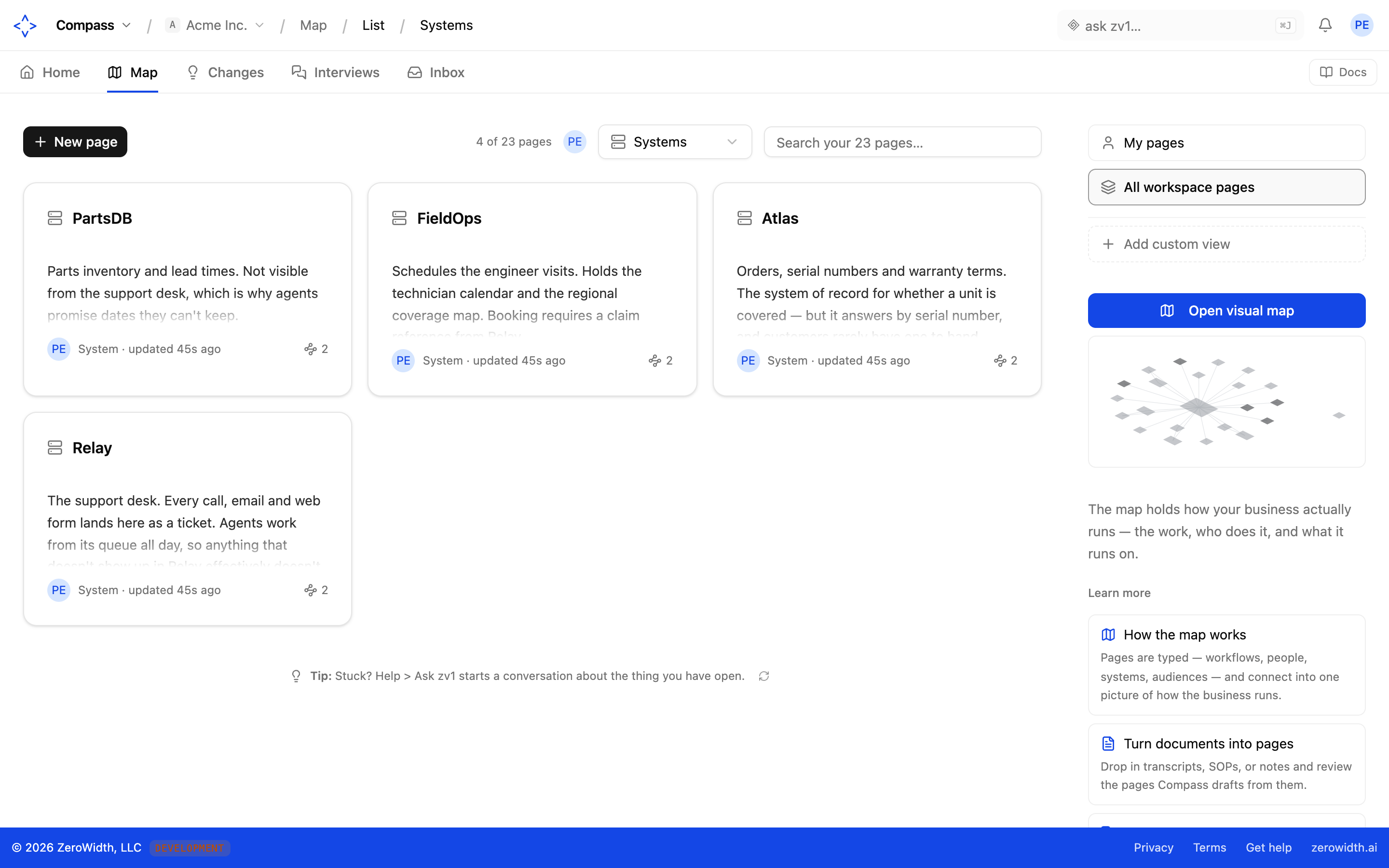
Turn the documents you already have into pages on the map
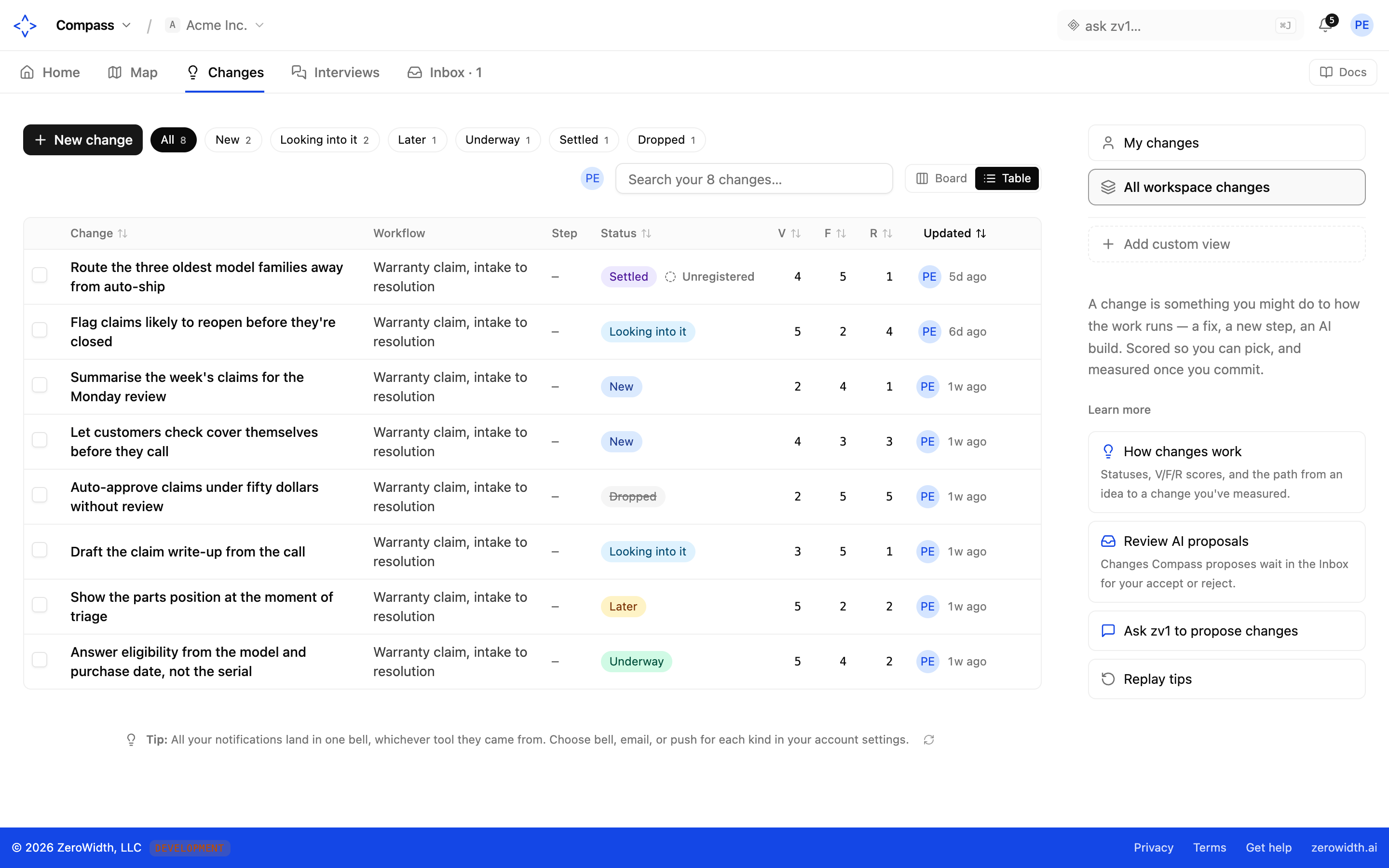
Rank the changes worth making, with the scores behind each one
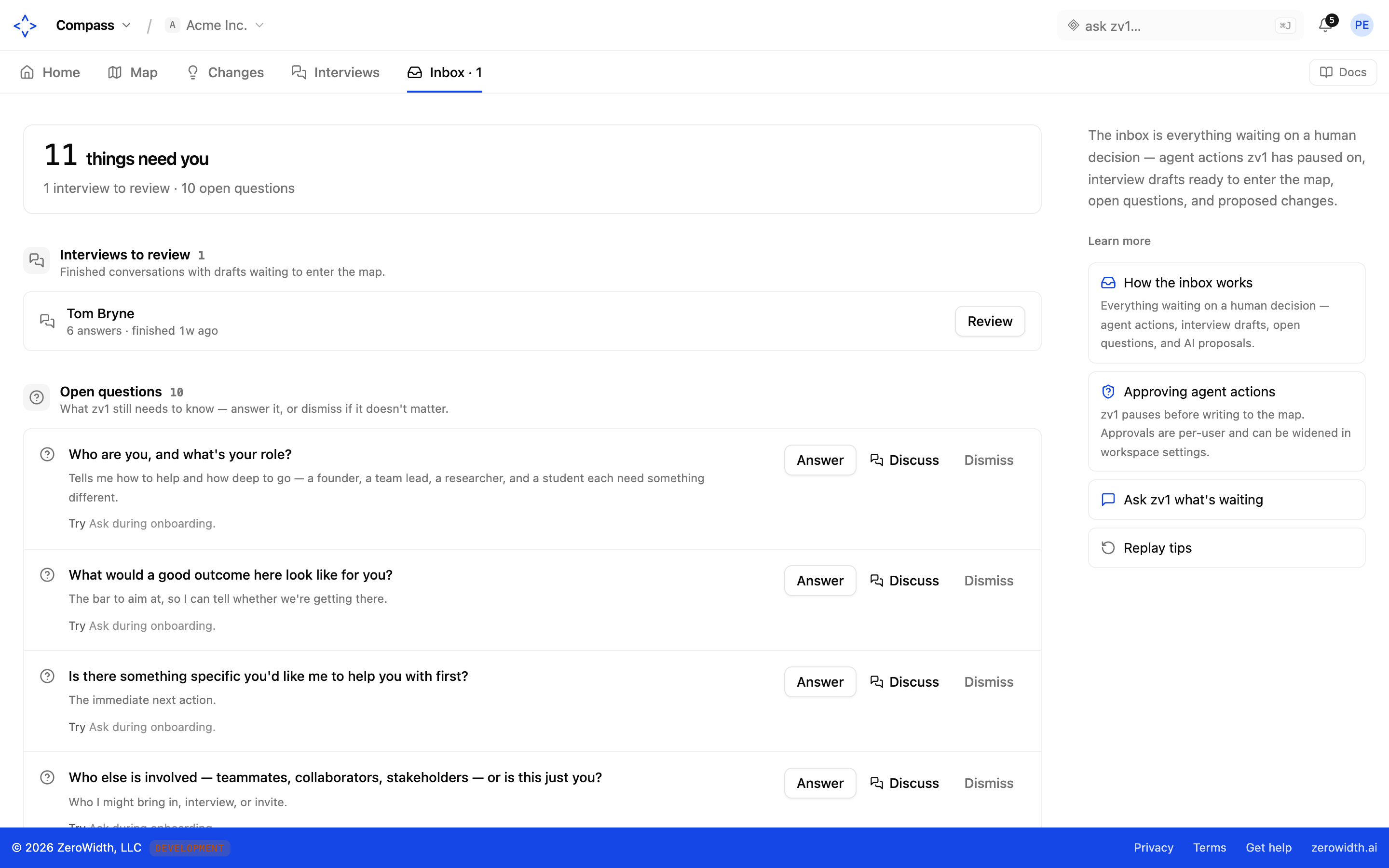
See where each fact came from and which pages need a fresh look
The work that decides how a business actually runs is almost never the work anyone names in the kickoff meeting.
The map, how it gets filled, and what comes out of it.
A typed map of how the business runs, several ways to fill it without a documentation project, and the changes that come out of it.
A typed map
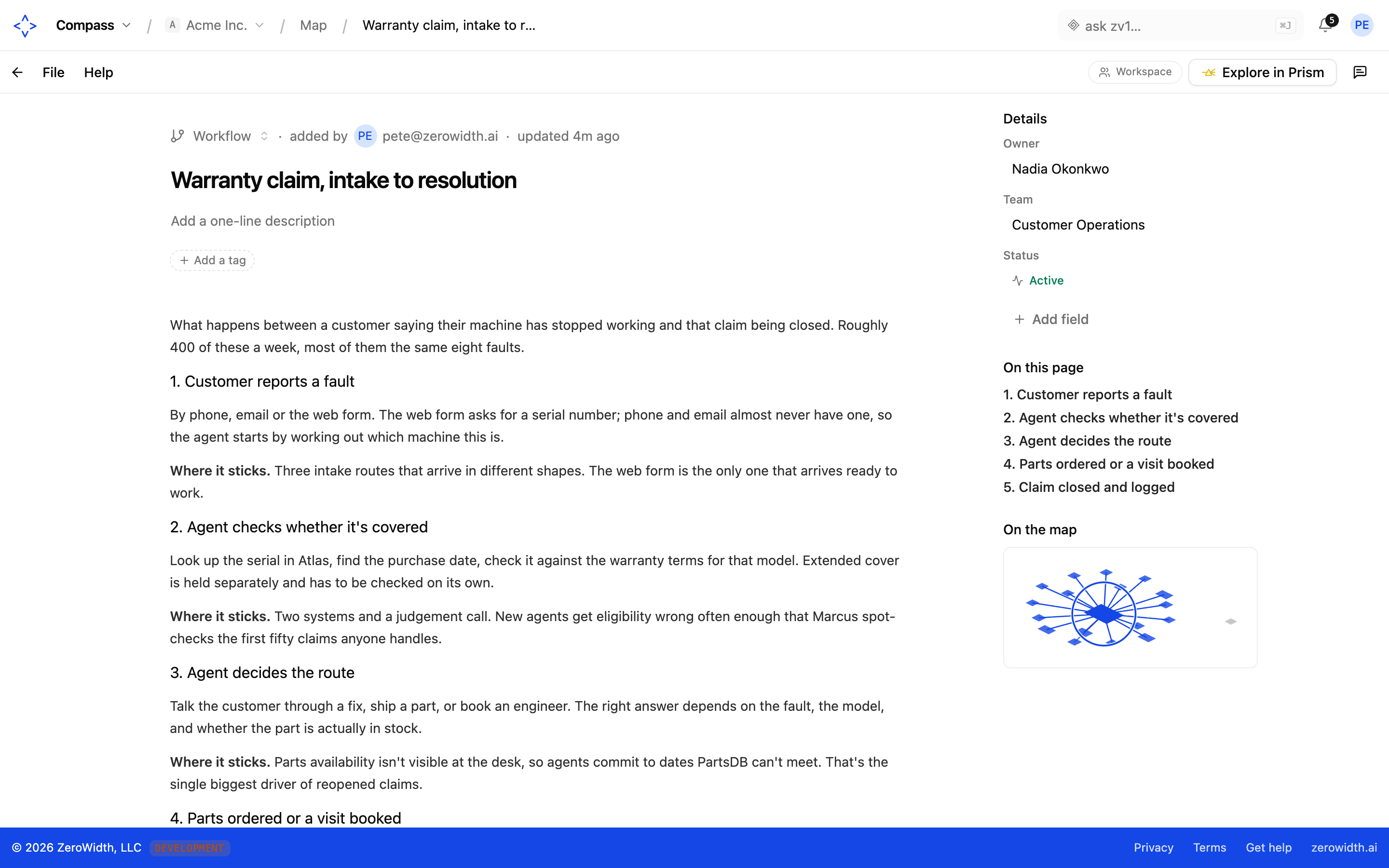
Give every page a type and connect it with typed relationships, and you can ask the map questions a document can't answer — like what depends on the system you're retiring.
- Nine page types
- Workflow, person, system, pain point, document, value, priority, audience, and offering. The type is what makes a page findable by somebody who doesn't know it exists.
- Typed connections
- Owns, involved in, uses, serves, delivers, affects, documents, relates to. Each reads correctly from both ends, so you see what a person owns on their own page without adding a second link.
- Ownership that means something
- A named owner per workflow rather than a team. A team can't notice that a page has gone out of date; a person can, and can be asked.
- Search across everything
- One search over the whole compendium, so a fact written down eight months ago is retrievable by somebody who wasn't there.
Getting what's in people's heads out
The knowledge a process depends on is undocumented and lives in two people's heads. Four ways in, all of which end in the same map.
- Async interviews
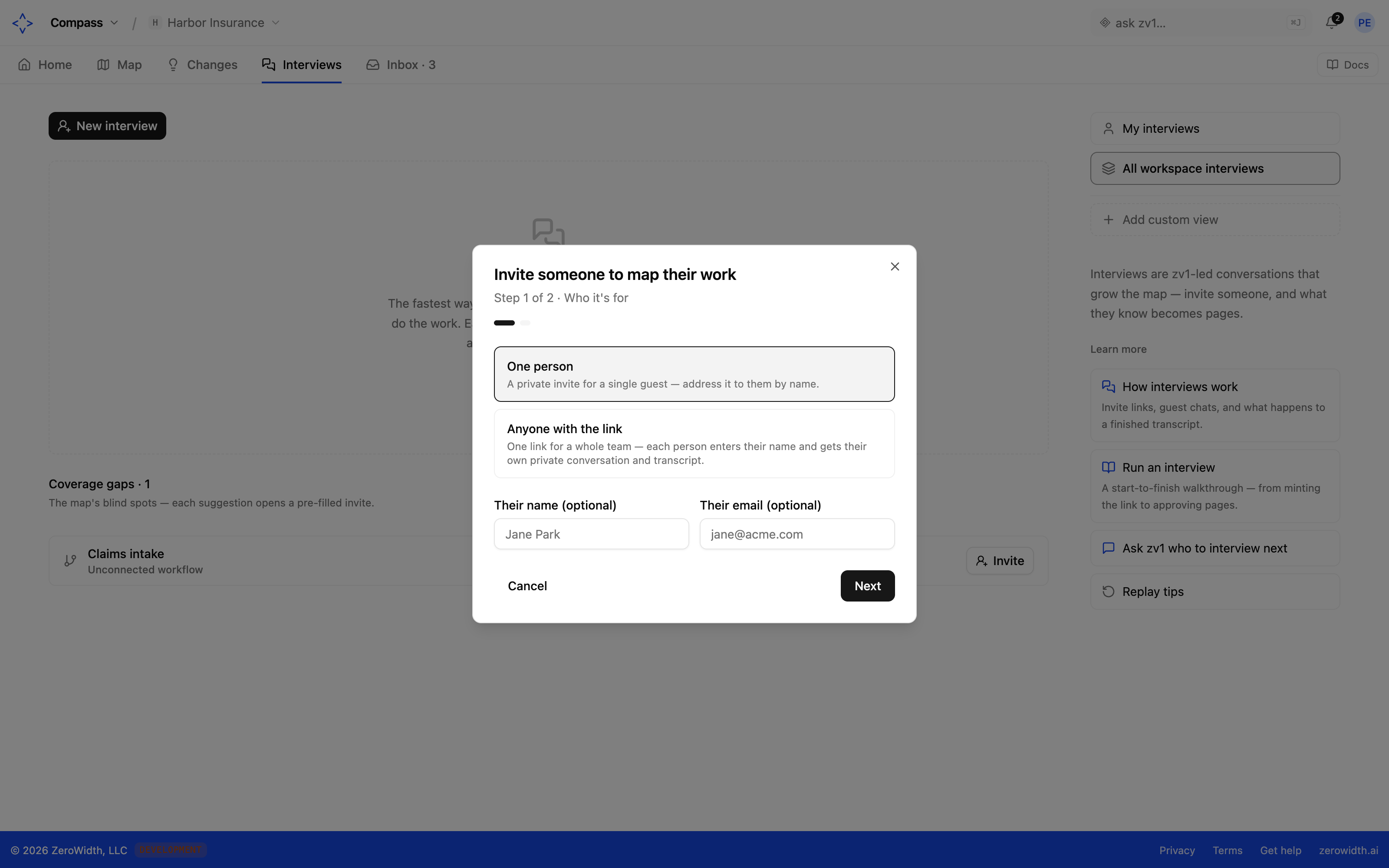
- Send a link instead of booking a meeting. Set the focus and attach the pages it should cover, and the questions land on their actual work rather than on generalities.
- Paste or upload
- A strategy deck or an existing process document becomes proposed pages and proposed connections, for you to accept or reject.
- Break out pages
- Re-run extraction over a document's body — a transcript, an uploaded file — and every page that comes out of it links back to where it came from.
- Nothing lands unreviewed
- Every proposal goes to a review step. Updates add to a page rather than replacing it, so nothing already written is silently overwritten.
Changes and the portfolio
Where the map turns into a decision about what to do first, with the reasoning attached so it survives a change of sponsor.
- Anchored to real work
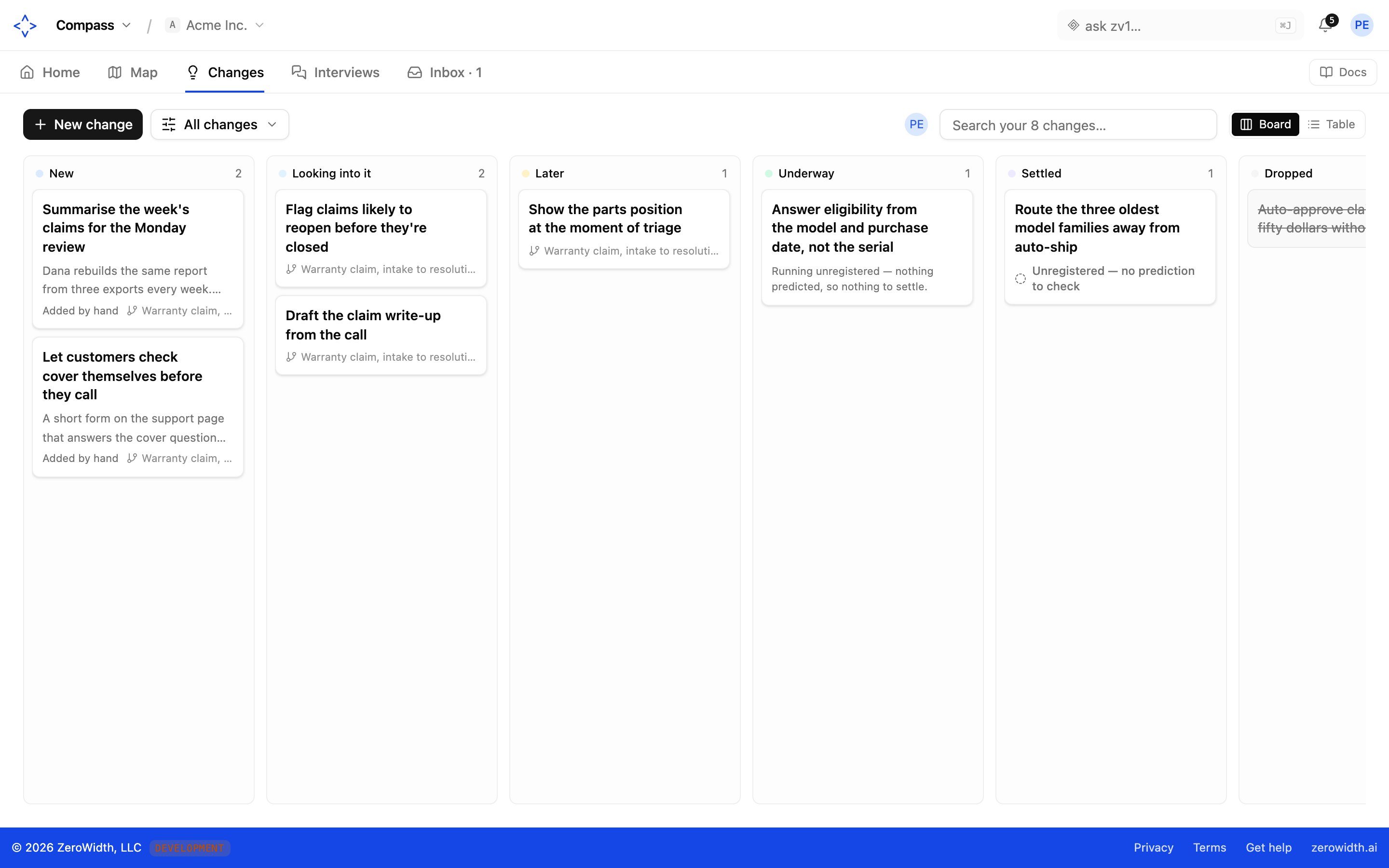
- A change attaches to a workflow page, and optionally to one step inside it, so a proposal can't float free of the work it changes.
- Three independent scores
- Value, feasibility, and risk, each 1 to 5 and each on its own. No weighted composite, because tuning the weights becomes the argument.
- A funnel with a memory
- New, backlog, experimenting, settled, rejected. The ones you turned down stay visible with their reasoning, so the same idea doesn't return unexamined next quarter.
- Bulk moves
- Triage many at once rather than one dialog at a time.
Keeping it true
Documentation projects fail three months after they finish. What decides it is whether anyone is obliged to touch the map when the work changes.
- A review queue
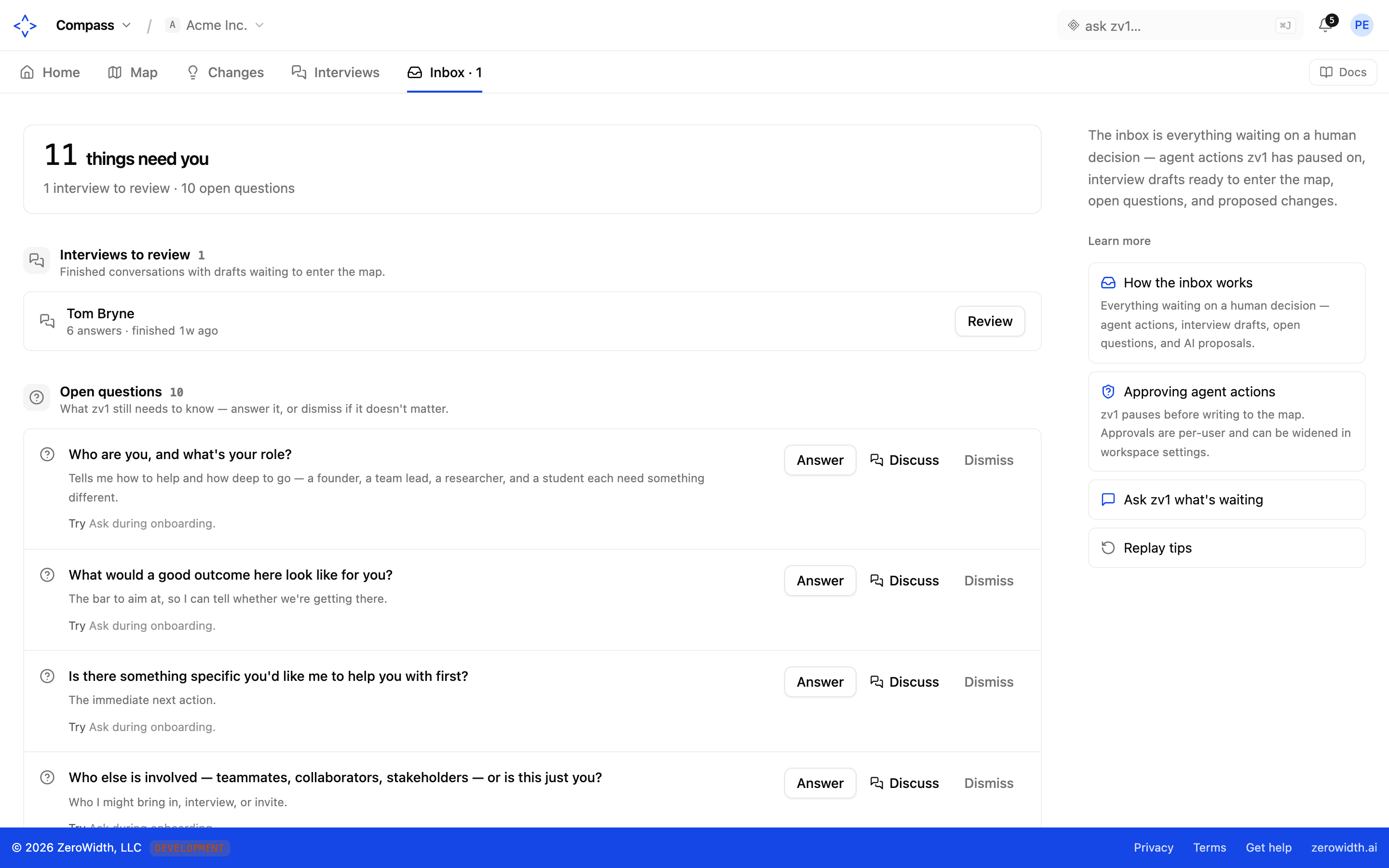
- What changed and what needs a human look, as a queue somebody works rather than a meeting somebody schedules.
- Provenance on every fact
- A page traces back to the interview or document it came from, so a disagreement about a rule resolves into who said it and when.
- Works with zv1
- Ask zv1 about the map, or to add to it, with every write gated behind approval — so a correction you make in conversation reaches the map itself.
From "where do we even start" to a sequenced plan.
Compass runs as a short, structured engagement, usually about three weeks. You come out of it with a working map of the business, a ranked list of changes worth making, and a plan a CTO and a CFO can both agree on.
Map the work as it actually happens
Workflows, handoffs, where time leaks, where tacit knowledge lives. The map is the deliverable: a working description of how a real team does a real job today.
Get what's in people's heads onto the map
The knowledge a process depends on usually lives with two people who have never written it down. Interviews, pasted documents, and the pages your team writes themselves all end up in the same map.
Score the changes worth making
Score each candidate change on how much it would improve the work and how hard it would be to make. What comes out is a ranked list, with the reasoning attached to each one.
Make one change and see if it held
Say what you expect the change to do before you make it, then come back to the map with what actually happened. The map stays true because the work keeps returning to it.
Not sure how your business actually runs?
Compass is the work we've been doing on the consulting side for years, packaged as a product. Tell us about your business and we'll come back with a candid read on what an engagement could look like.